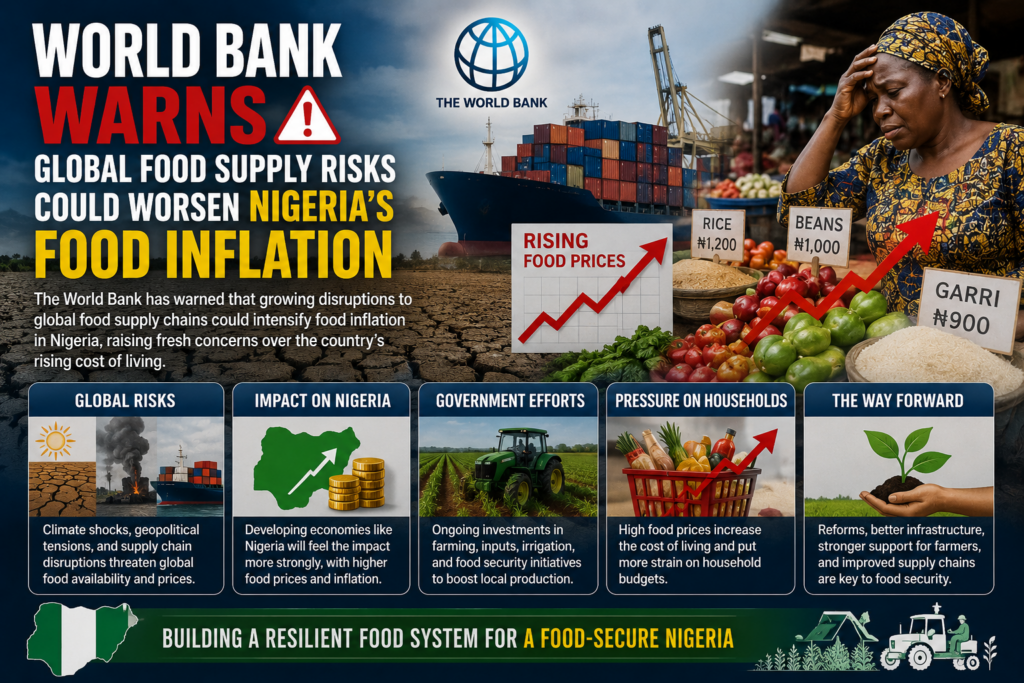
World Bank Warns Global Food Supply Risks Could Worsen Nigeria’s Food Inflation
The World Bank has warned that growing disruptions to global food supply chains could intensify food inflation in Nigeria, raising fresh concerns over the country’s rising cost of living.
According to the international financial institution, global challenges—including climate-related shocks, geopolitical tensions, and supply chain disruptions—continue to pose significant risks to food availability and prices, with developing economies such as Nigeria expected to feel the impact more strongly.
The warning comes despite ongoing efforts by the Federal Government to strengthen domestic agricultural production through increased investment in farming, improved access to agricultural inputs, expanded irrigation projects, and initiatives aimed at enhancing food security across the country.
Economic analysts say sustained pressure on global food supplies could keep prices of essential commodities elevated, placing additional financial strain on households already grappling with inflation and high living costs.
The World Bank urged continued reforms to improve agricultural productivity, strengthen food supply chains, and build resilience against external shocks. Experts also emphasized the need for increased support for local farmers, improved storage facilities, and better transportation infrastructure to help stabilize food prices and ensure long-term food security in Nigeria.